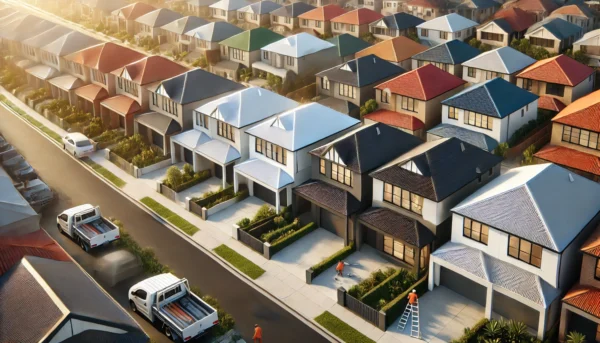
It’s Not Just a Style Choice—Colour Has a Job to Do
When selecting a roof for your home, colour might seem like a purely aesthetic decision. But in Sydney’s climate, your roof colour plays a much bigger role. It can influence internal temperatures, energy usage, lifespan of materials, and how well your home fits into its surroundings.
Whether you’re building new or replacing an old roof, making a smart colour choice balances form and function. It’s about more than matching your façade—it’s about boosting performance and enhancing curb appeal at the same time.
How Colour Affects Heat Absorption
In Sydney, where summer heat can be intense, your roof’s ability to reflect or absorb solar radiation matters. Light-coloured roofs (like pale grey, off-white, or light beige) reflect more sunlight, keeping roof surfaces cooler and reducing the load on your home’s cooling systems.
Dark colours (like charcoal, black, or deep green) absorb more heat, which can be beneficial in colder regions but may raise interior temperatures during Sydney’s warmer months. While insulation and ventilation help, the colour of your roof still has a direct impact on how hard your air conditioning has to work.
Choosing the right finish is equally important. Matte and light-reflective coatings can increase the reflectivity of even darker shades, improving performance without compromising on style.
If your home features a unique architectural layout or combines different roofing angles, working with custom roof designs ensures that colour and performance are considered across the entire roofline.
Visual Harmony and Property Value
Colour has an immediate effect on how your home is perceived from the street. A roof that complements your exterior paintwork, trim, and landscaping can make your home look more polished and cohesive. This is especially important for resale value, as first impressions count.
In traditional neighbourhoods, muted tones and earthy colours often work best. They reflect heritage styles while staying timeless. In modern settings, bold colours like deep grey or matte black can create striking contrasts with white or timber façades.
The key is balance. Your roof should elevate the look of your home without drawing attention away from other architectural features. For homeowners designing with aesthetics in mind, understanding how shingle materials influence style and durability can help you create a long-lasting look that doesn’t sacrifice performance.
Colour Durability and Fade Resistance
Not all colours age the same. Darker shades are more prone to showing fading over time, especially under constant UV exposure. Lighter colours often fade more gradually and can hide minor dust or debris more effectively between cleans.
Modern roofing materials come with UV-resistant coatings that extend colour life and protect against chalking or surface wear. This is particularly valuable in high-sun suburbs like those closer to the coast or in western Sydney, where roofs receive intense daily exposure.
If you’re planning to stay in your home long-term, choose a colour that not only suits your taste today but will still look fresh 10 or 20 years down the line.
Energy Ratings and Council Considerations
In some parts of Sydney, councils and developers impose guidelines around roof colours for energy efficiency or visual consistency—especially in new estates or areas governed by BASIX (Building Sustainability Index) requirements. These rules often favour light-coloured roofing to reduce heat retention and urban heat island effects.
Before selecting your colour, it’s worth checking whether your location has any restrictions or energy rating targets. In many cases, colour is a compliance consideration—not just a creative one.
Matching Colour to Your Material
Colour behaves differently depending on the material it’s applied to. Colorbond steel, for example, offers consistent colour across large surfaces with excellent fade resistance. Concrete tiles may appear lighter once cured, and terracotta tiles maintain their pigment thanks to natural clay properties but offer fewer modern tones.
When choosing a roof colour, consider how it looks with the texture and sheen of the material. A matte black metal roof gives a completely different impression than glossy black tiles. Texture also affects how the roof appears from a distance, especially in bright daylight or after rain.
That’s why comparing options side by side—both colour and material—is essential when aiming for a high-performance, high-appeal result.
Tips for Choosing the Right Roof Colour
- Think about orientation: North-facing roofs get more sun, so heat reflection matters more there.
- Use swatches outdoors: View samples at different times of day to see how light affects colour.
- Coordinate with gutters and trims: Your roof should tie into the overall colour scheme.
- Plan for longevity: Choose timeless tones if resale is likely within 10–15 years.
- Check local requirements: Some zones have visual or energy-efficiency rules that affect your colour options.
Final Thoughts
The right roof colour brings together your home’s architecture, location, and lifestyle needs. It can make your home cooler, cleaner-looking, and more visually integrated with the streetscape. But it can also enhance performance—helping your home stay comfortable and energy-efficient across Sydney’s seasons.
Choosing a roof colour isn’t just about taste. It’s a decision that affects everything from comfort and maintenance to value and compliance. For the best results, align your colour with your long-term goals, your material choice, and a roof style that suits your property. For inspiration and expert guidance, explore more options through our full approach to roof design.
